Some puppy and kitten problems can safely wait for a morning appointment, but a few genuinely cannot: trouble breathing, repeated vomiting or diarrhea, a painful swollen belly, seizures, uncontrolled bleeding, or a suspected poison or swallowed object all need attention right away. Young puppies and kittens carry almost no reserves, so a kitten who stops eating or a puppy with ongoing vomiting can slide into dangerous dehydration or low blood sugar within hours. The hard part is that they hide illness well and then crash fast, which makes waiting and watching riskier for them than for a grown dog or cat. When you are not sure which side of that line your pet is on, treating it as urgent is almost always the safer choice.
St. Petersburg Animal Hospital and Urgent Care runs walk-in urgent care for dogs and cats, with the in-house bloodwork and X-rays to work up a struggling puppy or kitten instead of leaving you guessing. We can check for low blood sugar and dehydration, catch a swallowed object or blockage on an X-ray, and we have the surgical capability to remove it in-house when that is what a young pet needs. If you are worried about your puppy or kitten, give us a call and come in so we can act on it. For a true life-threatening emergency, or anything happening while we are closed, head straight to the nearest 24-hour veterinary ER.
The Can’t-Wait List
- Puppies and kittens run through their reserves fast, so a problem that looks minor in the morning can be an emergency by that afternoon.
- Trouble breathing, repeated vomiting or diarrhea, seizures, a suspected poison or swallowed object, and sudden collapse all need same-day care.
- When you’re not sure whether something counts as an emergency, calling us and coming in is almost always safer than watching the clock at home.
- Pet-proofing the house, supervising play, and finishing the vaccine series head off most of the trouble young pets land in.
Why Do Puppies and Kittens Get Sick Faster Than Adult Pets?
Puppies and kittens get sick faster because their bodies have no cushion to absorb a problem. Their immune systems are still coming online, they lose fluids quickly, and a dose of something toxic that a grown dog might shrug off can overwhelm a body that weighs only a few pounds.
When something seems off, a quick phone call helps you sort come-in-now from watch-at-home. Catching small problems before they snowball is exactly what preventive care is built for, and it starts with knowing what normal looks like for your own pet.
Which Puppy and Kitten Symptoms Are Red Flags?
Some puppy and kitten signs can be watched for an hour or two with a phone call to guide you, but these never wait: trouble breathing, nonstop vomiting or diarrhea, seizures, a swallowed object or toxin, and sudden collapse.
Trouble Breathing
Fast or labored breathing, an extended neck, and gums that fade to pale or blue all signal respiratory distress that needs help today, not tomorrow. Open-mouth breathing in a kitten is also cause for prompt care, since cats rarely pant normally. Causes run from infections to airway obstructions, heart defects, or severe allergic reaction, and trouble breathing can tip from mildly concerning to a full-blown emergency in minutes. Keep your pet calm, call ahead, and come in for urgent care so we can begin assessment the moment you arrive.
Vomiting or Diarrhea That Won’t Stop
One episode may be nothing; repeated vomiting or diarrhea within a few hours is a different story, especially in a body this small. In an unvaccinated puppy, repeated vomiting paired with bloody diarrhea can point to parvovirus, a fast-moving virus that turns life-threatening without prompt treatment. In a kitten, panleukopenia is essentially the parvovirus equivalent. Parasites, diet mistakes, foreign object ingestion, and other viruses can drive the same pattern. Bring a fresh stool sample if you can, which helps us screen for parasites.
Seizures
A seizure can look like collapse with paddling legs, stiffness, drooling, or a loss of awareness, and it’s frightening to witness. Causes in young pets include toxins, low blood sugar, liver problems such as a shunt, and neurological issues. Managing seizures at home comes down to clearing hard objects away, keeping your hands away from the mouth, and timing the episode so we know how long it lasted. Once it passes, call us right away and come in so we can figure out why it happened.
Injuries From Falls, Fights, and Accidents
Young puppies and kittens are curious and clumsy, which lands them in trouble from couch dives, rough play with a bigger dog, and the occasional run-in with a car. Watch for limping, swelling, bleeding, pale gums, or any change in breathing after a spill. A small puncture from bite wounds often hides far more damage underneath, since teeth crush and tear tissue well below the skin. For active bleeding, press gently with a clean cloth; if a broken bone or spinal injury is possible, keep your pet as still as you can on the way in. We can stabilize the injury and provide wound and fracture care, and coordinate with a specialty center when a complex repair calls for it.
Swallowed Objects and Toxins
Puppies and kittens explore the world with their mouths, which puts medications, cleaners, antifreeze, chocolate, xylitol, and a surprising number of houseplants within reach. Signs of poisoning range widely, from drooling and tremors to weakness or sudden collapse. If your puppy or kitten swallows something questionable, calling poison control right away, even before any symptoms appear, gets treatment moving sooner and tells us exactly what to prepare for. You can reach the ASPCA Animal Poison Control Center at 888-426-4435, and bringing any packaging with you helps us match treatment to the toxin.
Swallowed objects are the other half of this problem: a sock, a hair tie, or a chunk of a toy can lodge in the intestines and cause repeated vomiting, a painful belly, straining, or a flat refusal to eat. An X-ray or ultrasound often catches the blockage, and removal of the object typically requires surgery. The sooner we catch it, the better the outcome and less complicated the surgery is, so don’t wait on a swallowed object hoping it will pass on its own.
Sudden Collapse or Weakness
Sudden wobbliness or collapse in a toy-breed puppy often traces to hypoglycemia, a blood-sugar crash that a dab of honey or corn syrup rubbed on the gums can hold off during the drive in. Other culprits include infections, a heavy parasite load, or a heart problem the pet was born with. Only try the honey if your pet is awake and able to swallow; if they’re unconscious, never put anything in their mouth, since it can end up in the lungs. A quick blood test tells us whether sugar, organ function, or something else is behind the crash.
Urinary Trouble, Especially in Male Kittens
Frequent urination or pink-tinged urine can signal a urinary tract infection, which needs a visit but isn’t necessarily an emergency. Inability to urinate, on the other hand, is an emergency. While uncommon in younger cats, a male kitten straining in the litter box with little or no urine to show for it may have a urethral obstruction, which can turn fatal within 24 to 48 hours when the bladder can’t empty. Watch for crying in the box and constant licking at the genital area. A urinalysis and an X-ray help us tell a simple infection from a true blockage quickly.
Eye Injuries
A scratch or poke to the eye, common from roughhousing or curious faces investigating the garden a little too closely, can leave your pet squinting, tearing, or showing a cloudy or reddened surface. Upper respiratory infections cause similar symptoms, especially in kittens. Young pets tend to rub at a sore eye, which turns a minor irritation into a real injury fast. An e-collar, if you have one, prevents further damage, and early treatment protects vision.
Sudden Changes in Behavior
A puppy who suddenly hides under the bed or snaps unexpectedly, or a kitten who scratches after being picked up when they were previously calm, is often telling you something hurts. That deserves attention, especially alongside any other symptom. Handle a hurting pet gently and slowly, because even the sweetest one may react when they’re in pain. Confusion, disorientation, sudden vocalization, or an increase in sleeping are also behavior changes that need to be investigated.
Refusing to Eat
Healthy puppies and kittens usually treat mealtime like the best part of the day, so skipping more than a meal or two is worth noticing. Toy breeds and young kittens can slide toward low blood sugar when they miss even one meal. Try warming the food to boost the smell first; if your pet still turns it down or brings it back up, come in.
Do Some Breeds Face Higher Emergency Risks as Puppies and Kittens?
Some breeds start life with a built-in vulnerability. Flat-faced puppies and kittens fight to move air, which a humid St. Petersburg afternoon only makes harder, giant breeds shoulder extra orthopedic stress, and toy breeds run low on blood sugar easily. Some pets may also be born with congenital health conditions, like Cavalier King Charles Spaniels and heart valve problems, Persian cats and kidney disease, or Yorkies with liver shunts, so breed-specific health risks are worth knowing before an emergency arrives.
| Breed group | The young-pet risk to watch |
|---|---|
| Flat-faced breeds like Frenchies, Bulldogs, and Persians | Narrow airways make breathing trouble and overheating a real danger |
| Large and giant breeds | Fast-growing joints take on orthopedic stress, and bloat risk climbs with age |
| Toy and small breeds | Blood sugar crashes easily, and liver shunts turn up more often |
| Kittens and toy breeds | Tiny bodies are injured more easily if accidentally stepped on, shut in a door, or if they fall from a height |
Our puppy and kitten visits build breed-specific guidance into the vaccine and parasite foundation every young pet needs.
What Should Be in a Puppy and Kitten First-Aid Kit?
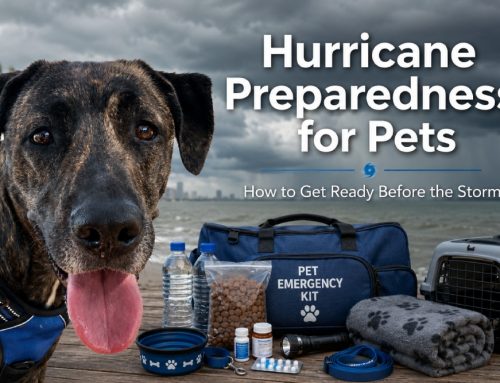
A puppy or kitten first-aid kit exists to keep your pet steady until you reach us, not to solve the problem at home. The supplies are simple to gather, and a first aid class teaches the hands-on skills that go with them. A well-stocked kit usually holds:
- Wound supplies: rolled gauze, non-stick pads, and self-adhesive bandage wrap.
- Cleaning basics: antiseptic wipes and sterile saline for flushing wounds or eyes.
- Tools: a digital thermometer, blunt-tipped tweezers, and small scissors.
- Extras: an e-collar to stop licking, plus your clinic’s number and the nearest 24-hour emergency hospital’s number.

How Can You Prevent Puppy and Kitten Emergencies Before They Start?
Most puppy and kitten emergencies are preventable with a little household discipline. Pet-proofing your home comes down to viewing your space from their level, and understanding that they explore the world with their mouth. Anything they shouldn’t eat or physically enter, or could be squished by, needs to be secured.
- Store medications and cleaners up high, remove toxic plants, and cover the trash
- Secure loose electric cords, craft supplies, kids’ toys, or anything small enough to be eaten
- Block off access to high areas that could result in a fall, like balconies or staircases without a solid walled side
- Pay extra attention when closing doors, since a tiny pet following you closely can get caught
- Use caution in recliners and rocking or rolling chairs, as a fragile leg or tail can easily break when rocked or rolled over
- Close off any gaps behind cabinets, holes around pipes, and make sure every window has a screen
Skip the dog park and other high-traffic spots until vaccines are complete, and supervise every play session, since most swallowed objects happen in a quiet ten seconds. Matching safe chew toys to your pet’s size and chewing style heads off both the choking risk of a swallowed piece and the tooth fractures a too-hard toy can cause. Those cracked teeth are easy to miss at home, which is one reason routine dental care is part of catching problems before they hurt.
Is Pet Insurance Worth It for a Puppy or Kitten?
Enrolling in pet insurance while a pet is young and healthy means a future emergency decision can rest on what the animal needs rather than what the bill says. Premiums are lowest at this stage, and nothing’s been flagged as a pre-existing condition yet. The first few years of a pet’s life are when they get into the most mischief, making insurance worth it for most pets.
When you compare plans, look past the monthly premium to the deductible, the reimbursement percentage, the annual payout cap, and any waiting periods before coverage kicks in. Whether a policy covers hereditary conditions and exam fees matters too, since those are exactly the surprises a young pet can bring. If insurance isn’t the right fit, we’re glad to talk through our transparent pricing and payment and financing options so cost is never the reason care waits.
Frequently Asked Questions About Puppy and Kitten Emergencies
How can I tell if my puppy or kitten is dehydrated at home?
Dehydration shows up fast in young pets. Gently lift the skin over the shoulders: in a well-hydrated pet it snaps right back, while in a dehydrated one it stays tented for a moment. Dry or tacky gums, sunken-looking eyes, and unusual sluggishness are other clues. Pair any of these with vomiting or diarrhea and it’s time to come in rather than wait.
Should I try to make my pet vomit if they swallowed something toxic?
Do not try to induce vomiting on your own. Some substances, like batteries, sharp objects, and caustic cleaners, do even more damage coming back up, and the wrong technique can cause its own problems. Call a poison hotline or reach us first, describe exactly what your pet got into, and follow the guidance you’re given. When bringing it back up is the right move, it’s safest done here where we can watch your pet closely.
My kitten seems fine after a fall. Do I still need to worry?
Possibly, and it’s worth a closer look. Puppies and kittens are experts at hiding pain, so a pet who bounces up and trots off can still have a bruised lung, a hairline fracture, or internal bleeding that surfaces hours later. Keep the next few hours quiet and watch for limping, labored breathing, a tender belly, or a dip in appetite. If anything seems off, a quick exam settles it.
Trust Your Gut and Act Fast When Your Puppy or Kitten Seems Off
Emergencies with puppies and kittens come down to quick decisions, and you’re far better equipped to make them once you know the red flags by heart. Trust what you’re seeing: a young pet who seems truly off usually is, and our team would always rather you check than second-guess.
Keep our number where you can find it, pet-proof the house, and schedule a wellness visit at St. Petersburg Animal Hospital and Urgent Care to get ahead of any potential emergencies. If you’re worried now, come in right away for urgent veterinary care in St. Petersburg. If a true emergency strikes while we’re closed, the nearest 24-hour emergency hospital is the right first stop.